What Is the Most Common Shoulder Injury From a Car Accident?
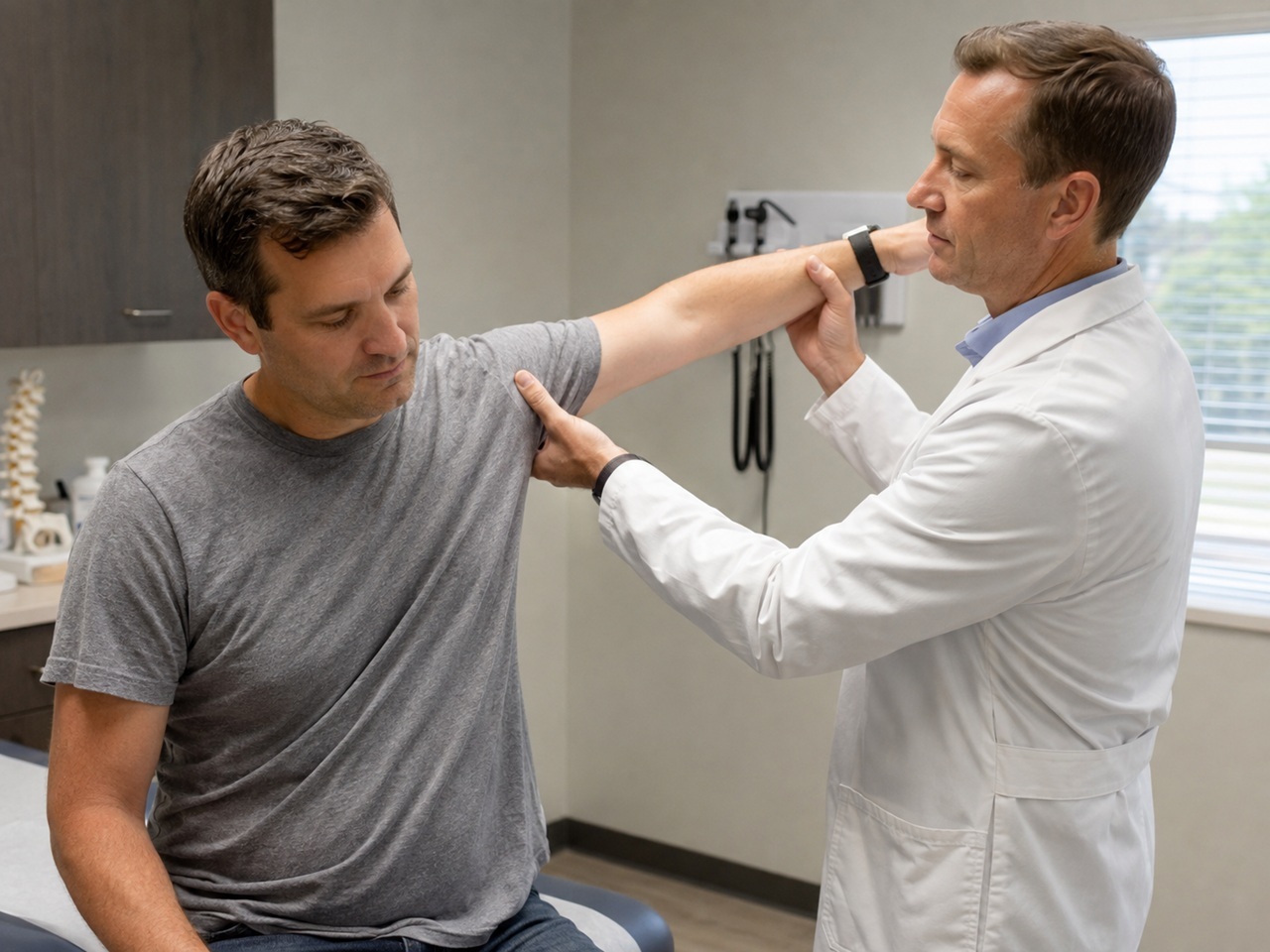
Rotator Cuff Injuries Are Common After Trauma, But They Aren't The Only Possibility
A Tavares car accident can put sudden force through the shoulder in several ways. A driver may brace against the steering wheel, the shoulder may take a direct impact, or the arm may be forced into an awkward position during a side-impact or rollover crash.
Rotator cuff tears are one important shoulder injury that can follow trauma, but it would be too broad to call them the single most common shoulder injury after every car accident. Crash victims can also suffer fractures, labral tears, dislocations, AC joint injuries, strains, and other soft-tissue damage.
The rotator cuff is made up of four muscles and their tendons that help stabilize the shoulder and allow the arm to move. According to the American Academy of Orthopaedic Surgeons, a tear can result from an acute injury, but many rotator cuff tears also develop gradually through age-related degeneration.
That distinction can become important after a crash. Our Tavares car accident lawyers at Law Offices of Brent C. Miller, P.A. often have to look at more than the MRI itself. Prior symptoms, earlier treatment, the mechanism of the crash, medical examinations, and what changed afterward can all matter when an insurer argues that a shoulder condition existed before the collision.
Crash Forces Can Injure Several Parts Of The Shoulder
The shoulder has an unusually wide range of motion because it depends heavily on muscles, tendons, ligaments, and cartilage for stability. That mobility also gives a collision several ways to injure the joint.
Depending on how the crash happened, a shoulder injury can involve:
- Rotator Cuff Tear: One or more of the tendons that help stabilize and move the shoulder can be partially or completely torn.
- AC Joint Injury: Trauma can damage the joint where the collarbone meets the highest part of the shoulder blade.
- Clavicle Fracture: A direct blow or other significant trauma can fracture the collarbone.
- Labral Tear: The ring of cartilage surrounding the shoulder socket can be damaged by forceful movement or trauma.
- Shoulder Dislocation: Enough force can drive the upper arm bone partly or completely out of the shoulder socket.
- Muscle, Tendon, or Ligament Strain: Soft tissues can be stretched or injured even when there isn't a fracture or full tendon tear.
A side-impact car accident can involve a different injury mechanism than a rear-end or head-on collision, which is one reason the crash itself needs to be considered alongside the medical diagnosis.
Shoulder Pain May Not Tell You Exactly What Was Injured
Rotator cuff tears can cause shoulder pain, weakness, and difficulty lifting or rotating the arm. Some people also notice pain at night, particularly when lying on the affected shoulder.
But symptoms alone don't establish which structure was injured.
Pain when reaching overhead can occur with more than one shoulder condition. Weakness can have several causes. A popping or grinding sensation doesn't automatically establish a torn rotator cuff.
If shoulder symptoms develop or worsen after a crash, tell the medical provider exactly what you're experiencing and when it began. The provider can determine which examination, imaging, or treatment is medically appropriate rather than assuming the problem is ordinary soreness that will disappear on its own.
A Normal X-Ray Does Not Rule Out A Rotator Cuff Tear
This is one of the more important practical distinctions after a shoulder injury.
X-rays are useful for looking at bones, including fractures and certain joint problems, but they don't show a rotator cuff tear itself. AAOS explains that MRI and ultrasound can provide clearer images of soft tissues and help identify the location, size, and extent of a rotator cuff tear.
| Diagnostic Tool | What It May Help Evaluate |
|---|---|
| Physical Examination | Pain, strength, range of motion, stability, and which movements reproduce symptoms |
| X-Ray | Fractures and other bone or joint abnormalities, but not the rotator cuff tear itself |
| MRI | Soft-tissue structures, including the location and extent of a rotator cuff tear |
| Ultrasound | Soft-tissue structures and rotator cuff abnormalities when clinically appropriate |
That means someone can have a normal initial X-ray and still later be diagnosed with a significant soft-tissue injury.
It also doesn't mean everyone with shoulder pain needs an MRI immediately. Imaging decisions depend on the medical history, examination, symptoms, and the provider's clinical judgment.
An MRI Can Show A Tear Without Proving When It Happened
This is where shoulder claims can become especially fact-specific.
AAOS notes that many rotator cuff tears are degenerative and become more common with age. Some people can even have a tear without significant symptoms.
So when an MRI after a crash shows a rotator cuff tear, an insurance company may argue that the tear existed before the collision.
The MRI alone doesn't necessarily answer that causation question.
Other evidence can help establish what changed:
- Whether the person had shoulder pain or treatment before the crash;
- Whether earlier records or imaging show the condition of the shoulder before the collision;
- When new pain, weakness, or restricted motion began;
- Whether the mechanism of injury is consistent with the diagnosed condition;
- What the treating providers say about causation or aggravation; and
- Whether the person's ability to work or perform ordinary activities changed after the accident.
A crash doesn't have to create a completely new shoulder condition to cause compensable harm. Depending on the evidence, trauma can also aggravate a pre-existing or previously asymptomatic condition.
Florida PIP Has A 14-Day Treatment Requirement
Florida currently uses a no-fault automobile insurance system. For crashes covered by that system, Personal Injury Protection benefits can help pay certain medical expenses and lost income without first establishing who caused the collision.
Under Florida Statute § 627.736, an injured person generally must receive qualifying initial medical services and care within 14 days of the motor vehicle accident to receive PIP medical benefits.
The basic PIP structure is more nuanced than simply saying everyone receives $10,000:
- PIP generally reimburses 80% of reasonable, medically necessary covered medical expenses;
- Disability benefits generally cover 60% of qualifying lost income and earning capacity;
- Medical and disability benefits are subject to the policy's statutory limit;
- Medical reimbursement can reach up to $10,000 when an authorized provider determines that the injured person had an emergency medical condition; and
- When it is determined that the person does not have an emergency medical condition, medical benefits are generally limited to $2,500.
Someone who initially thinks a shoulder injury is minor can therefore face two different timing problems. The medical condition may not yet be fully diagnosed, while the 14-day PIP treatment window is already running.
Getting medically appropriate care also creates contemporaneous records of the symptoms that existed after the collision. That can become important later if an insurer argues that shoulder complaints began weeks or months afterward.
PIP Is Not The Same Thing As A Claim Against The At-Fault Driver
PIP benefits don't necessarily compensate someone for every loss caused by a serious shoulder injury.
If another driver negligently caused the crash, a separate liability claim may potentially seek damages beyond the benefits available through PIP. Florida car accident compensation can include qualifying medical expenses, lost income, diminished earning capacity, property damage, and, when Florida's statutory requirements are met, noneconomic damages such as pain and suffering.
Florida's no-fault law places a separate threshold on recovery of pain, suffering, mental anguish, and inconvenience from another motorist.
Under Florida Statute § 627.737, those noneconomic damages generally require an injury consisting in whole or in part of:
- A significant and permanent loss of an important bodily function;
- A permanent injury within a reasonable degree of medical probability, other than scarring or disfigurement;
- Significant and permanent scarring or disfigurement; or
- Death.
A rotator cuff diagnosis by itself doesn't automatically establish that threshold. Whether the injury is permanent and how it affects function are medical and factual questions that depend on the evidence in the particular case.
Treatment Can Range From Rehabilitation To Surgery
Not every rotator cuff tear requires surgery.
AAOS notes that treatment decisions can depend on the person's age and activity level, whether the tear resulted from trauma or degeneration, the size of the tear, overall health, pain, and the extent to which the condition interferes with daily life.
Depending on the injury, treatment may involve rest, medication, physical therapy, injections, or surgery.
For an injury claim, the important point isn't simply whether someone had surgery. It is what treatment was medically necessary because of the crash, what limitations remained afterward, and whether future care is reasonably expected.
Someone who works with their hands, lifts overhead, drives professionally, or performs physical labor may also experience a very different economic impact from the same shoulder limitation as someone whose work doesn't depend as heavily on upper-body strength or range of motion.
Gaps In Care Can Create A Causation Dispute, But Every Gap Has Context
An insurance company may point to delayed or interrupted treatment and argue that the crash didn't cause the shoulder condition.
That doesn't mean every missed appointment destroys a claim.
People delay care for many reasons. They may initially expect soreness to improve. They may have trouble getting an appointment, lack transportation, face insurance problems, or be unable to miss work.
The better approach is to document what actually happened rather than trying to create a perfect-looking treatment record after the fact.
If symptoms persist or worsen, tell the provider. If there was a delay in treatment, make sure your lawyer knows why. If shoulder problems existed before the collision, disclose that history rather than allowing an insurer to characterize an omission as dishonesty.
Florida's Fault Rules Can Also Affect The Recovery
Even when the medical evidence clearly connects a shoulder injury to the collision, the amount recovered can still depend on responsibility for causing the crash.
Under Florida Statute § 768.81, damages in most negligence cases are reduced according to the injured person's percentage of fault. A person found more than 50% responsible for their own harm generally can't recover damages in a negligence action covered by the statute.
That is separate from the medical question of whether the collision caused or aggravated the shoulder injury.
An insurer may dispute either issue, or both.
A Shoulder Injury Claim Needs Both Medical And Crash Evidence
Proving a serious shoulder injury after a collision generally requires more than showing an MRI report to an insurance adjuster.
The evidence may include:
- The crash report;
- Photographs or video showing the collision;
- Witness statements;
- Emergency and follow-up medical records;
- Physical examination findings;
- X-rays, MRI studies, or ultrasound when medically appropriate;
- Prior shoulder records or imaging when relevant;
- Opinions from treating medical providers;
- Physical therapy records;
- Employment and wage records; and
- Evidence showing how the injury affected daily activities.
Florida also generally gives a person 2 years to file a negligence lawsuit for a crash that occurred after the 2023 change to the limitations law. Still, the deadlines affecting a Florida car accident claim aren't all the same. The 14-day PIP treatment requirement can become important long before the lawsuit deadline approaches.
The Diagnosis Is Only Part Of What Determines The Claim
Rotator cuff tears are significant shoulder injuries, but there isn't a reliable medical basis for saying that every car accident victim is most likely to suffer that particular diagnosis.
The more useful questions are what part of the shoulder was injured, whether the crash caused or aggravated the condition, what treatment is necessary, whether any limitations will remain, and how those limitations affect the person's work and everyday life.
Our Tavares car accident lawyers have more than 75 years of combined legal experience representing injured people throughout Central Florida. We can investigate how the crash happened, review the medical history and insurance issues, and determine which damages the evidence supports.
If you're dealing with persistent shoulder pain, weakness, or loss of motion after a Florida crash, contact us for a free case evaluation. We'll review the collision, your treatment, and the insurance coverage involved so you can understand your legal options.
"What I like most about this practice is that they are very prompt and polite. They always return my phone calls and always answer my questions." - Kim L., ⭐⭐⭐⭐⭐