FAQs About Ocala Car Accidents
What types of car accidents happen in Ocala, FL?
The most common types of car accidents we see in Ocala include:
- Rear-end collisions: This happens when one vehicle crashes into the back of another, often due to tailgating, distracted driving, or sudden stops.
- Side-impact (T-bone) accidents: These typically occur at intersections when one driver fails to yield, runs a red light, or misjudges a left turn.
- Head-on collisions: This occurs when two vehicles traveling in opposite directions collide front to front; these are rare but often very serious.
- Sideswipe or lane-change crashes: This happens when vehicles traveling parallel brush or collide during merging, lane changes, or overtaking.
- Single-vehicle accidents/roadway departure crashes: A single vehicle leaves its lane or hits an object (pole, guardrail, ditch), often due to loss of control, speeding, or poor road conditions.
- Multi-vehicle collisions/pileups: Chain-reaction crashes involving three or more vehicles, especially in heavy traffic or low visibility conditions.
- Left-turn/failure-to-yield collisions: These are car accidents where a vehicle turning left miscalculates or doesn’t see oncoming traffic, causing a side or head-on collision.
Return to Top
What types of injuries occur in Ocala car accidents?
In Ocala (and more broadly in Florida), car accidents can cause a wide spectrum of injuries, from relatively mild to catastrophic. Based on local legal sources and state-wide injury data, common injuries include the following:
- Whiplash/neck injuries: These injuries involve the rapid back-and-forth motion of the head, which can strain or tear muscles, ligaments, and discs in the neck.
- Back and spinal injuries: These injuries include bulging or herniated discs, spinal strains, nerve impingement, or damage to the vertebrae.
- Spinal cord injuries/paralysis: More severe wrecks may damage the spinal cord, potentially causing partial or complete paralysis.
- Traumatic brain injuries: These injuries range from concussions to brain contusions or intracranial bleeding, especially when the head strikes objects or is jolted violently.
- Bone fractures and broken bones: Ribs, arms, legs, hips, collarbones, and other bones are commonly fractured during impact.
- Soft tissue injuries (muscles, tendons, ligaments): These include sprains, strains, and tears of muscles or ligaments, which may not always show up on imaging.
- Lacerations, cuts, bruises, and abrasions: These injuries occur from contact with broken glass, sharp metal, or interior vehicle components (or from airbag deployment).
- Internal injuries: Damage to internal organs (such as the liver or spleen), internal bleeding, or trauma to the thoracic or abdominal cavities might not be immediately obvious, but can be life-threatening.
Return to Top
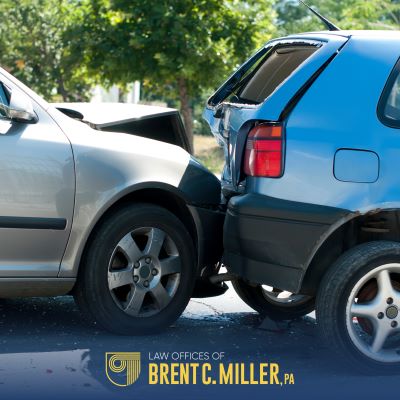 The moments right after a crash can feel chaotic, but the steps you take matter. First, check yourself and others for injuries and call 911 if anyone needs medical attention. Stay at the scene until law enforcement arrives. Leaving can result in penalties, even if the car accident wasn’t your fault.
If it’s safe to do so, move your vehicle out of traffic and exchange information with the other driver, including insurance and contact details. Avoid arguing or admitting fault; stick to the facts. Take photos of the vehicles, the road, traffic signs, and any visible injuries. If witnesses stop, ask for their contact information.
Finally, see a doctor as soon as possible, even if you feel fine. Some injuries take time to show symptoms. Not only is this important for your health, but it also creates medical records that support your claim later on.
Return to Top
When is the right time to contact an Ocala car accident lawyer?
Florida’s statute of limitations gives you two years from the date of the crash to file a lawsuit for injuries. If you miss this deadline, you generally lose your right to seek compensation in court. Property damage claims may follow different timelines, but the safest approach is to act quickly. Even though you technically have two years, waiting is risky.
It’s best to call a lawyer as soon as you’re able, ideally within days of the car accident. Insurance companies often reach out quickly, sometimes pressuring victims into giving recorded statements or accepting low settlement offers. Having a lawyer from the start ensures you don’t say or sign anything that could hurt your case.
Early legal guidance also helps preserve evidence, such as skid mark measurements, surveillance footage, or black box data from vehicles. These details can disappear quickly. A lawyer can act fast to protect your rights and start building a strong case.
Even if you’re unsure whether you need legal help, a consultation is free and comes with no obligation. Many Ocala accident victims find peace of mind just knowing someone is looking out for their best interests.
Return to Top
Who is responsible for damages and injuries?
Florida uses a no-fault insurance system, which means your own Personal Injury Protection (PIP) insurance is the first to cover medical bills and lost wages, regardless of who caused the crash. However, PIP is limited and doesn’t cover pain and suffering.
If your injuries meet Florida’s “serious injury” threshold, you can pursue additional compensation from the at-fault driver. This may include medical costs beyond PIP limits, future treatment, lost income, and non-economic damages such as emotional distress or pain and suffering. In some cases, responsibility may extend to a vehicle manufacturer or government entity if a defective vehicle part or poorly maintained roadway contributed to the crash.
Sorting out responsibility isn’t always simple, but our Ocala car accident attorneys can identify all potential sources of compensation so you’re not left paying the price for someone else’s negligence.
Return to Top
What happens if the other driver has no insurance?
Being hit by an uninsured driver can feel like hitting a dead end, but you still have options. Many Florida drivers carry uninsured/underinsured motorist (UM/UIM) coverage, which steps in when the at-fault driver doesn’t have enough insurance or any at all. This coverage can help pay for medical bills, lost wages, and other damages.
If you don’t have UM/UIM coverage, you may still be able to turn to your PIP benefits, health insurance, or file a lawsuit directly against the at-fault driver. In practice, uninsured drivers often have limited assets, which can make recovery more challenging, but it isn’t impossible.
A lawyer can review your policies, explore creative legal strategies, and fight to ensure you’re not left bearing the financial burden of someone else’s irresponsibility.
Return to Top
Can I recover pain and suffering damages?
You can recover pain and suffering damages, but only if your injuries meet Florida’s serious injury threshold. Under the state’s no-fault system, PIP covers your medical expenses and lost wages but not pain and suffering. To pursue those damages, you must show that your injuries are permanent, involve significant scarring or disfigurement, or result in the loss of an important bodily function.
If you qualify, you may seek compensation for physical pain, emotional distress, anxiety, depression, and the loss of enjoyment of life. These damages don’t come with receipts, so they’re harder to measure, but they can make up a significant portion of a settlement.
Our Ocala car accident lawyers can help document the impact of your injuries and fight for the compensation you deserve beyond what PIP provides.
Return to Top
How is fault established in a car crash?
Fault is determined by looking at whether a driver acted negligently, which means they failed to use reasonable care on the road. That could involve distracted driving, running a red light, speeding through busy intersections, or driving under the influence.
Police reports often play a major role in determining fault, but they’re not the final word. Evidence such as photos, dashcam or traffic camera footage, witness statements, and crash reconstruction experts can all help establish liability. Insurance companies will be quick to conduct their own investigations, but the results are often biased and lean in their favor, not yours.
Collecting evidence as soon as possible is key, since conditions change and memories fade quickly. Our legal team can help secure additional records (such as surveillance footage or cell phone data) that may not be easy to access on your own. The more thorough your evidence, the stronger your case will be when negotiating with insurance companies or in court.
Return to Top
What if the insurance company rejects my claim?
A denied claim doesn’t mean your case is over. Insurance companies often reject claims to protect their profits. They may argue your injuries weren’t serious, that treatment wasn’t necessary, or that you were at fault.
If this happens, you can appeal the denial. A lawyer can gather additional evidence, strengthen your documentation, and negotiate directly with the insurance company. If they still refuse to act fairly, your attorney can take the case to court. Florida law gives you the right to challenge unfair claim denials.
Don’t give up if you receive a denial letter. With legal support, many denied claims are successfully overturned.
Return to Top
Should I accept an insurance company’s first settlement offer?
First settlement offers are almost always lower than what your claim is worth. Insurance companies use this tactic to close cases quickly and cheaply. While it may feel tempting to accept, especially when bills are piling up, doing so can leave you short of the money you’ll need for long-term recovery.
Once you accept an offer, you generally can’t go back for more, even if new medical problems develop. It’s best to have an Ocala car accident attorney review the offer and compare it against your actual damages. Patience pays off. A careful negotiation almost always results in a better outcome than rushing to accept the first check.
Return to Top
Will my car accident case go to trial?
Most car accident cases in Ocala never make it to trial. Insurance companies know that settlements are faster, less expensive, and less stressful for everyone involved. However, if an insurance company refuses to make a fair offer, a trial may be necessary to get you the compensation you need.
Even when a lawsuit is filed, many cases resolve before reaching the courtroom. Trials are generally reserved for disputes over fault or the value of damages. That’s why it’s important to work with an Ocala car accident lawyer who is skilled at negotiation but also ready to fight in court if that’s what it takes.
Return to Top
How much will hiring a car accident attorney cost in Ocala?
Our firm works on a contingency fee basis, which means you don’t pay anything upfront. We only get a percentage of your settlement or verdict if we win your case. If we don’t recover compensation, you don’t owe us anything.
With our contingency fee structure, you have access to legal help without worrying about the cost of hiring an attorney.
Return to Top
Protect your rights after an Ocala car crash
A car accident can leave you with more than just damaged property; it can bring pain, frustration, and financial strain that lasts long after the crash. When insurance companies put their bottom line first, it’s important to have someone fighting for yours. An Ocala car accident lawyer can help you understand your rights and push back against low offers or claim denials.
The first conversation costs nothing. Contact us online or call today to set up a free consultation and learn how a lawyer can take the pressure off your shoulders.